Pre-Workout Basics
Pre-Workout Meals: What to Eat and When
The right pre-workout meal is not a rigid recipe. It is a comfortable, repeatable way to arrive at training with enough energy for the session ahead.

The Useful Starting Point
Pre-workout meals get made unnecessarily complicated. You do not need a perfect food list, a dramatic ritual or a meal that looks like someone else’s social post. You need enough fuel to train well, a choice that sits comfortably in your stomach and a routine you can repeat on ordinary weekdays. That will look different for an early lift, a hard leg session after work or a long endurance day.
Start with the time you have. A larger meal has more room for carbohydrates, protein and foods you enjoy, but it also needs more digestion time. A snack close to training should usually be simpler and smaller. That is the organizing idea for the whole guide: adjust the size and complexity to the clock, then adjust the details to your appetite and the work you are about to do.
Carbohydrate is often useful before longer or demanding sessions because it contributes to available energy. The sports-nutrition review of pre-exercise carbohydrate notes that the performance benefit is more relevant for longer work than for short sessions. Protein still matters across the day, but a meal before training does not need to carry the entire day’s nutrition on its own.
Build the Meal From the Time You Have
Think in broad windows, not rules written in stone. If you have two to three hours, a familiar meal can include a carbohydrate source, protein and whatever amount of fat and fiber you normally tolerate. Rice or potatoes with chicken, tofu or beans, a sandwich with fruit, or oatmeal with yogurt are all ordinary examples. The exact portion depends on your hunger, body size, the session and what else you have eaten that day.
With around one to two hours, many people prefer a lighter version: toast with eggs and fruit, yogurt with cereal and berries, or oatmeal with banana. Keep the decision practical. A meal that feels great at lunch may feel too heavy before intervals or high-rep training. If you are unsure, change one variable at a time, not your whole diet at once.
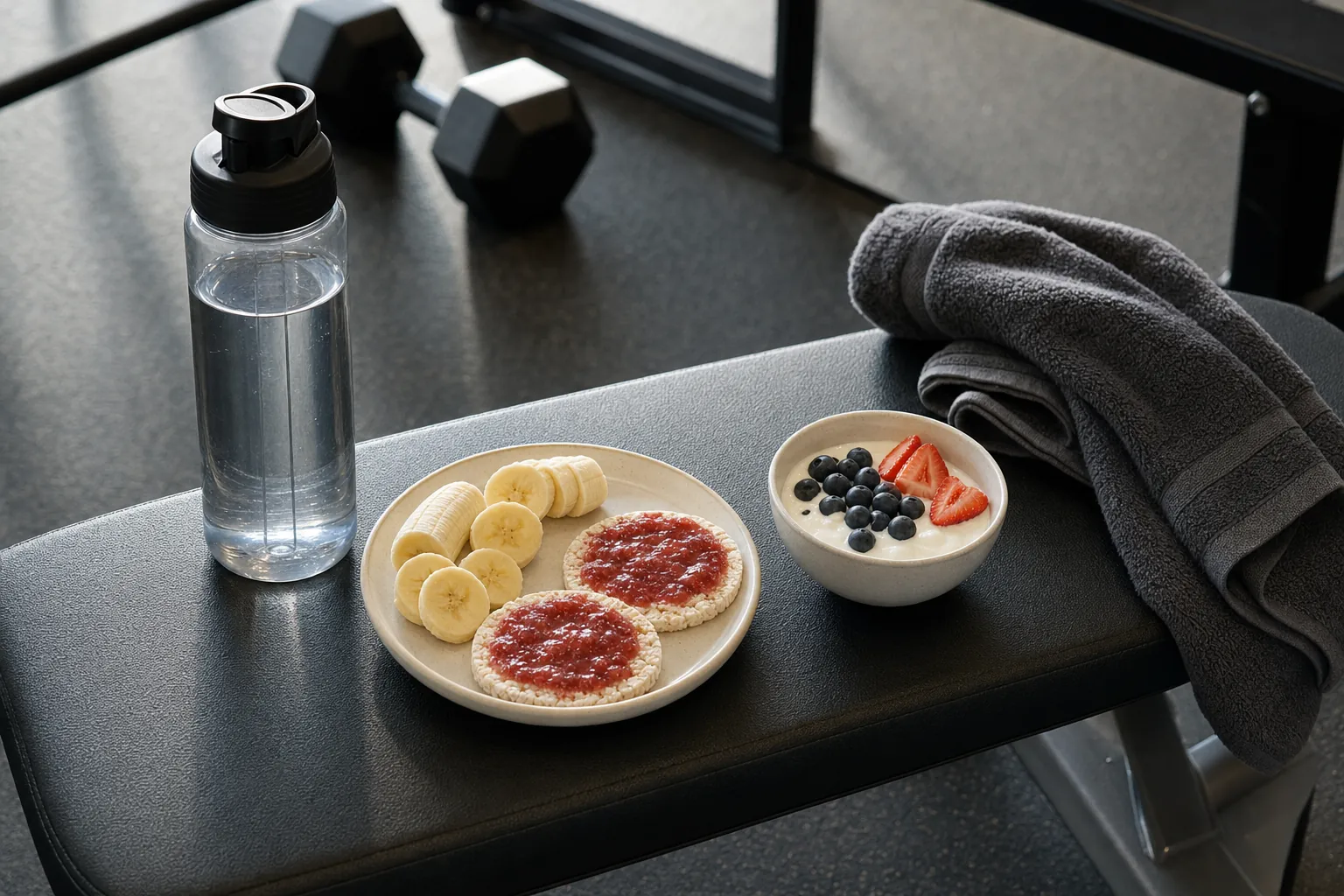
When training is close, the target is comfort. A banana, rice cakes, applesauce, a small yogurt or a simple smoothie may work better than a full plate. You do not have to force food in just because a chart says to. But if you repeatedly feel hungry, flat or distracted during training, a modest pre-workout snack is worth testing.

Choose Foods You Can Actually Digest
Food tolerance is not a character test. High-fat, very high-fiber or unusually large meals can feel uncomfortable when training starts soon afterward. That does not make those foods bad. It simply means they may fit better farther away from the session. On the other hand, a lower-fiber carbohydrate food may be easier to handle when you only have a short window.
Use your own training as the experiment. Pick one familiar option, keep the timing similar for a few sessions and notice your energy, comfort and focus. If it is too much, make it smaller or eat earlier. If you are still hungry, add a little more. This is more useful than copying exact grams from an athlete with a different schedule, appetite and training load.
Medical needs change the conversation. If you manage diabetes, gastrointestinal conditions, food allergies, medication interactions or another health concern, get individual guidance from a qualified clinician or sports dietitian. A generic gym article is not a substitute for that advice.
Protein Matters, But the Clock Is Not Magic
Protein supports training adaptation, yet the value of a routine is bigger than one narrow pre-workout window. The International Society of Sports Nutrition position stand on nutrient timing emphasizes total daily intake and regularly spaced protein feedings as central priorities. In other words, a consistent day of eating matters more than panic over one missed shake.
If a protein-containing meal fits before training, great. If you are training right after waking and prefer something small, you can get protein later in the day. The goal is not to make every meal identical. It is to build a pattern that supports your training without turning food into another source of stress.
Match the Meal to the Session
A short, easy workout may not require much planning beyond being reasonably fed and hydrated. A longer session, hard conditioning day or demanding lower-body workout may leave you more grateful for a real meal beforehand. A session that follows a busy workday may call for a reliable desk-friendly snack instead of an idealized dinner you will never have time to cook.
That is why meal prep can help without becoming a lifestyle performance. Having rice, potatoes, cooked protein, fruit or yogurt ready gives you options. It does not mean every container must be perfectly weighed or that your training fails when plans change. A prepared meal is useful because it reduces friction on the days you are already stretched thin.

Food First, Then Decide Whether a Formula Fits
A pre-workout meal and a pre-workout formula do different jobs. Food provides energy and nutrients. A formula may be an optional part of a training ritual when you have a specific reason to use one, such as choosing a stimulant-free option for late sessions. It cannot make up for skipping meals, dehydration, poor sleep or a training plan that does not fit your recovery.
If you want to explore that route, start by deciding what you want from it and read the label. Phitjunkie’s pre-workout lineup helps you compare available options, while Pump Non-Stim Pre-Workout is a caffeine-free option for people who prefer to keep caffeine out of the session. Use any formula as an addition to a sound routine, not as a replacement for one.
A Simple Pre-Workout Checklist
- How long until training starts?
- What did you eat earlier in the day?
- Is the session short and easy, or longer and demanding?
- What foods normally leave you comfortable when you move?
- Do you have water available before and during training?
The checklist is deliberately ordinary. Good routines are usually made from basic choices repeated long enough to learn what works.
The Bottom Line
Build pre-workout meals around timing, comfort and the session ahead. Eat a fuller meal when you have time, use a simpler snack when you do not and make adjustments from your own experience. Start with food and fluids, keep supplements optional and let consistency do more of the work than perfectionism.
Frequently Asked Questions
What is a good pre-workout meal?
A good pre-workout meal is one you can digest comfortably and repeat. When you have time, pair a carbohydrate food with a protein source. Closer to training, use a smaller, simpler snack and let your own tolerance guide the choice.
Should I eat before an early workout?
It depends on the session and how you feel. Some people train comfortably after a small snack, while others prefer a meal after training. If you notice low energy or hunger during early sessions, trial a simple carbohydrate-focused option and water first.
How long should I wait after a meal before working out?
There is no universal clock. A larger meal usually needs more time than a light snack. Use training days to notice what leaves you comfortable, energized and able to focus, then keep that routine consistent.
Do I need pre-workout supplements if I eat a meal?
No. Food and fluids are the foundation. A supplement can be optional for a specific preference, such as stimulant-free pump support, but it does not replace regular meals, hydration, training or recovery.