Pre-Workout Basics
Pre-Workout Snack Ideas That Fit Your Training Time
A useful pre-workout snack is not a magic recipe. It is a familiar food that gives you enough fuel for the session ahead without making your stomach the main event.
Start With the Gap Since Your Last Meal
The best pre-workout snack is often the least dramatic one. Before looking for a list of perfect foods, look at the day in front of you. When did you last eat? How hard and how long is the session? Are you actually hungry? Do you have 20 minutes, an hour, or two hours before you train? Those answers make a better starting point than copying someone else’s gym routine.
A snack can be useful when it has been a while since your last meal, when your session will be demanding, or when you have learned that you arrive flat without a little food. It is not a requirement before every walk, short session or lift. If you ate a balanced meal recently and feel good, you may be ready to go. The goal is to arrive prepared, not to force food because the clock says you should.
Carbohydrate is usually the practical centre of a pre-workout snack because it is a readily available fuel source during exercise. The University of Illinois Extension guidance on fueling for fitness suggests a snack 30 to 60 minutes before exercise when it has been more than two or three hours since a meal. Treat that as a starting point, not a rule that overrides your own comfort, hunger or health guidance.
Match the Snack to Your Clock
Timing changes the job of the snack. The closer you are to your warm-up, the more useful it is to keep the portion modest and easy to digest. With more time, you can tolerate a more complete option. This simple framework saves you from trying to eat a full meal in the car park or, on the other hand, showing up hungry because you thought a complicated routine was required.
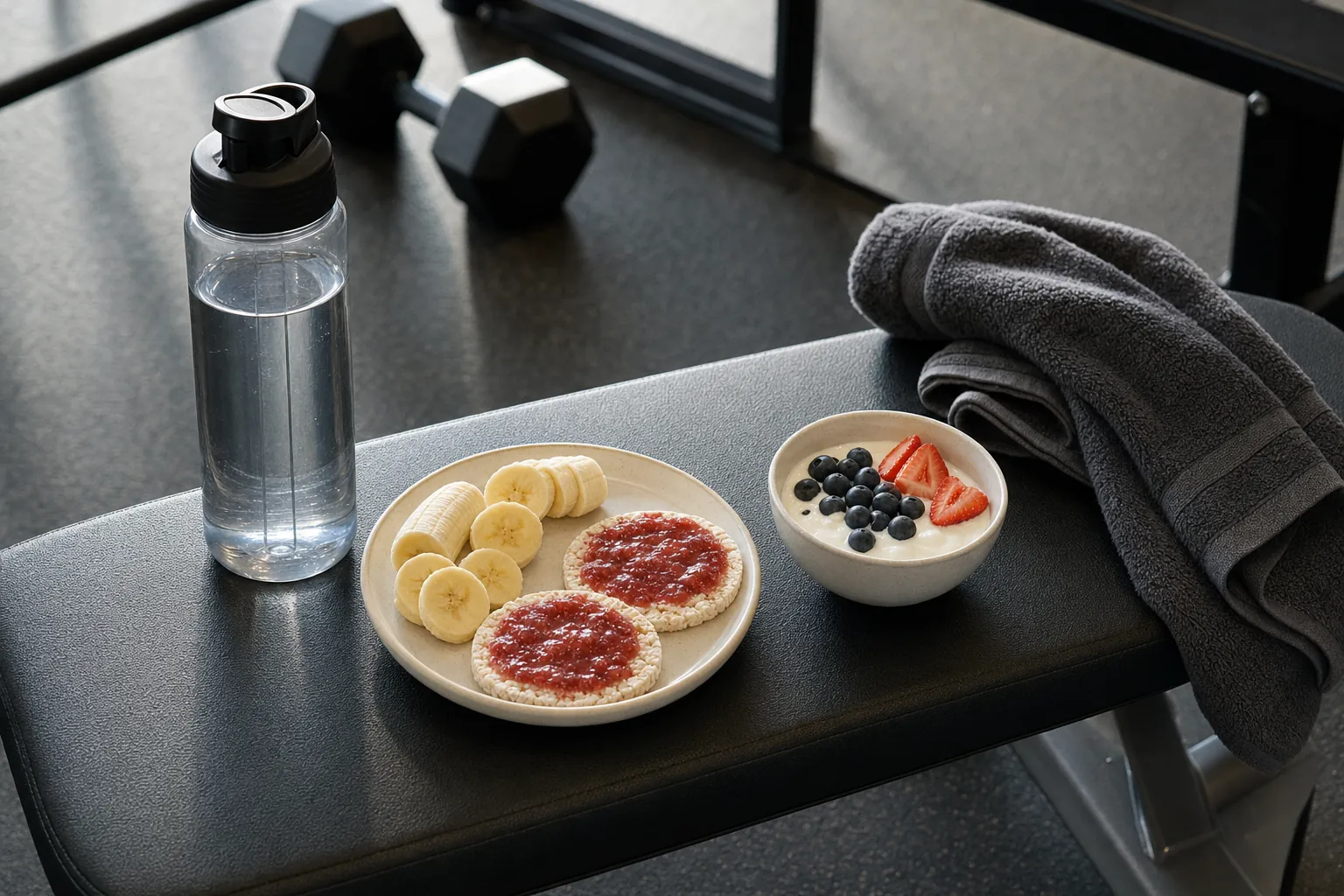
- About 15 to 30 minutes: keep it small and simple. A banana, applesauce, a few pretzels, a rice cake with jam or a small glass of juice can suit people who want something light.
- About 45 to 60 minutes: add a little more substance if it works for you. Fruit with yogurt, toast with a thin layer of nut butter, or oatmeal with fruit can be practical choices.
- One to two hours: you have more room for a snack that looks closer to a light meal, such as yogurt with cereal and fruit, a small sandwich, or oatmeal with milk and fruit.
The closer you are to exercise, the less appealing a high-fat, high-fibre or oversized snack may be. That is not a verdict on any food. It is simply a timing issue. Tufts nutrition guidance makes the same practical point: choose less food, and limit fat, protein and fibre, as training gets closer. Your stomach gets a vote.

Quick Options When Training Is Soon
If you are leaving for the gym in a few minutes, aim for familiar food rather than a heroic nutrition project. A banana is portable and easy to portion. Applesauce can work when solid food sounds unappealing. Pretzels, plain crackers or a rice cake with jam are other straightforward options. The right choice is the one that you can eat comfortably and repeat without turning every session into a test.
These are not “better” foods than a full breakfast. They just have a different job. On a rushed morning, the useful win may be taking the edge off hunger and giving yourself a little carbohydrate before you begin. If a specific food repeatedly causes discomfort, swap it out. Training is not the place to prove that you can tolerate a snack you dislike.
Water belongs in the picture, too. Drink regularly through the day and bring a bottle to the gym. For most ordinary sessions, plain water is a sensible default. Heat, duration, sweat and medical needs can change that, but complicated hydration products are not a replacement for a water habit you can actually keep.
More Time Lets You Add Staying Power
When you have an hour or more, a little protein alongside carbohydrate may make the snack feel more satisfying. Greek yogurt with fruit and cereal, toast with a small amount of nut butter and banana, or oatmeal with fruit are all ordinary examples. Portion size still depends on your appetite and training plan. You do not need to turn a snack into a feast to make it count.
This is especially helpful for people who train after work. Lunch may have happened hours ago, and the session may be the last demanding part of the day. A small planned snack can be more reliable than arriving ravenous and trying to power through. It can also make the post-gym meal decision easier, because you are less likely to be making it from an exhausted, overly hungry place.
There is no need to chase a perfect macro split. The International Society of Sports Nutrition notes that carbohydrate and protein can both have a role around training, while total daily intake remains a foundation for active people. Its nutrient timing position stand is a useful reminder that your whole routine matters more than one snack.

Build a Short List You Will Actually Use
The most useful pre-workout snack is not the one with the most ingredients. It is the one you can keep in rotation. Pick three or four options that fit your schedule, budget and food preferences. Keep one shelf-stable option around for rushed days, one easy fridge option, and one more substantial choice for sessions with a longer runway.
- Fast option: banana, applesauce, pretzels, crackers or a rice cake with jam.
- One-hour option: yogurt and fruit, toast with banana, or a small bowl of oatmeal.
- Longer-gap option: a light meal you already enjoy, with carbohydrate, some protein and enough time to digest.
- Travel option: a familiar snack in your gym bag, plus water, instead of relying on whatever is available at the last minute.
Test one variable at a time. If you change your snack, training time, caffeine intake and workout style all at once, you will not know what helped or what caused the uncomfortable session. Try a choice on a normal training day, note how you felt, and adjust the timing or portion before you write it off.
Food First, Then Decide Whether a Supplement Fits
Food and pre-workout products do different jobs. A powder does not automatically replace a snack, especially when you have not eaten for several hours. Start with the basics: food that suits you, enough fluid, a warm-up and a session you can recover from. Then decide whether a supplement has a clear role in your routine.
If you train later and do not want to add caffeine, the Journal’s caffeine-free pre-workout guide can help you compare that option without treating stimulation as mandatory. If your goal is a more focused resistance-training session, the better-pump training guide keeps the emphasis where it belongs: controlled work, sensible rest, food and fluids.
Anyone who is managing diabetes, a digestive condition, food allergies, medication changes, pregnancy or a prescribed eating plan should use advice from their own qualified clinician or dietitian. A general snack guide cannot replace individual care. It is also fine if your answer is that you train better without food immediately beforehand. Build from what works safely and consistently for you.
The Bottom Line
A good pre-workout snack should make training feel easier to start, not harder to plan. Keep it small and carbohydrate-forward when time is short. Choose a more complete option when you have longer before the session. Pay attention to hunger, comfort and the gap since your last meal. Ordinary food, water and a routine you can repeat will take you further than chasing the one snack that looks best online.
Frequently Asked Questions
What is a good pre-workout snack?
A good pre-workout snack is a familiar food you can digest comfortably before training. When time is short, a small carbohydrate-forward option such as a banana, applesauce or pretzels can be practical. With more time, you may prefer a more substantial snack with carbohydrate and some protein.
How long before a workout should I eat a snack?
Many people find 30 to 60 minutes useful for a small snack. The closer you are to training, the smaller and simpler the snack generally needs to be. Your last meal, workout duration and personal digestion all matter.
Do I need a pre-workout snack for every gym session?
No. If you ate a satisfying meal recently and feel ready to train, another snack may not add much. A snack can be useful when it has been several hours since you ate, you are training hard or long, or you notice hunger and low energy during sessions.
Should a pre-workout snack include protein?
A little protein can make sense when you have enough time before training and it agrees with you. When you are about to begin, easy-to-digest carbohydrates are often the simpler priority. Total food intake across the day matters more than making one snack perfect.